
Wikipedia Backlinks
How Do I Get Backlinks from Wikipedia? A Safe, Practical Guide for SEO and Referral Traffic
Jul
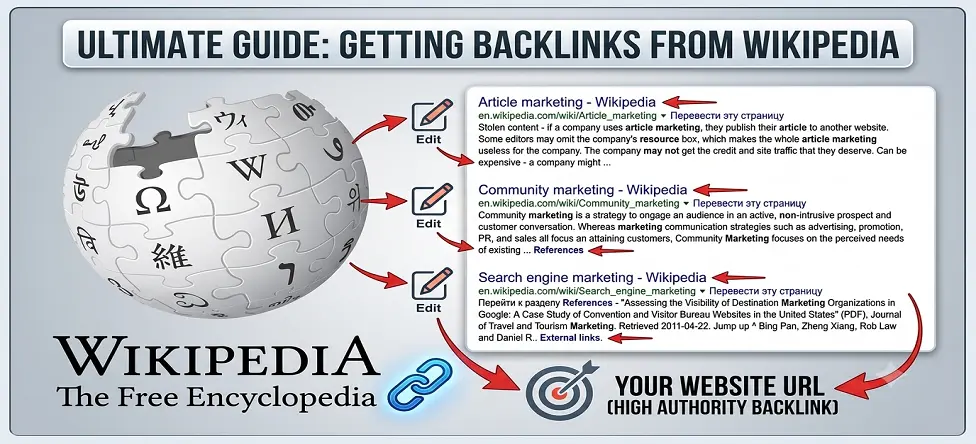
Getting a backlink from Wikipedia is a dream for many website owners, bloggers, SEO professionals, and business brands. Wikipedia is one of the most trusted websites in the world, and a link from a relevant Wikipedia page can bring credibility, referral traffic, brand visibility, and long-term authority.
But there is an important truth you should know first: Wikipedia is not a normal link-building platform. You cannot simply add your website link anywhere and expect it to stay. Wikipedia is an encyclopedia, not an advertising directory. Every external link, citation, and reference must help readers understand the topic better.
So, how do I get backlinks from Wikipedia?
The best way is to create genuinely useful, well-researched content that can be used as a reliable source, then place or suggest that link only where it adds real value. In this guide, you will learn how Wikipedia backlinks work, what types of links are acceptable, what mistakes to avoid, and how to build a safer Wikipedia backlink strategy for your website.
What Is a Wikipedia Backlink?
A Wikipedia backlink is a link from a Wikipedia page to an external website. These links usually appear in one of three places:
- References or citations — links used to support a fact, statistic, claim, quote, or piece of information.
- External links section — useful links placed near the bottom of a Wikipedia article.
- Infobox or official website field — common for brands, organizations, public figures, institutions, and websites that have their own Wikipedia page.
For SEO, the most valuable type is usually a relevant citation link because it is connected to specific information inside the article. However, it must support the content properly. If your page does not provide reliable, useful, and topic-relevant information, the link may be removed by Wikipedia editors.
Do Wikipedia Backlinks Help SEO?
Wikipedia backlinks are widely discussed in SEO because Wikipedia has massive trust, authority, and visibility. However, most Wikipedia external links use nofollow or similar link attributes, which means they are not the same as traditional dofollow backlinks.
Does that mean Wikipedia backlinks are useless? No.
A Wikipedia backlink can still provide value in several ways:
- It can send targeted referral traffic from people researching the topic.
- It can increase brand trust when your page is cited as a helpful resource.
- It can help journalists, bloggers, and researchers discover your content.
- It can create secondary backlink opportunities when others use Wikipedia as a research starting point.
- It can support your overall online authority when the link is natural and relevant.
The key is to think beyond “link juice.” A Wikipedia backlink should be earned because your content is useful, not because you only want to manipulate search rankings.
For businesses that want expert help finding suitable opportunities, our Wikipedia backlink service can help with research, relevance checking, and safe link opportunity planning.
Why Wikipedia Removes Many Backlinks
Many people try to add links to Wikipedia, but most low-quality links do not survive. Wikipedia editors often remove links when they look promotional, irrelevant, weak, duplicated, or self-serving.
Your backlink may be removed if:
- The linked page is mostly promotional.
- The page only sells a product or service.
- The link does not support a specific claim.
- The website is low-quality, thin, or full of ads.
- The source is self-published and not reliable enough.
- The same website is added to too many Wikipedia pages.
- The edit looks like spam or conflict-of-interest editing.
- The content already exists in better sources.
- The link is added only for SEO purposes.
Wikipedia’s goal is to protect article quality. If a link does not improve the page for readers, it will usually not last.
The Right Mindset: Earn the Link First
Before trying to get backlinks from Wikipedia, ask one simple question:
Would a neutral editor honestly use my page as a source?
If the answer is no, your first job is not link building. Your first job is content improvement.
A strong Wikipedia-worthy page usually has:
- Original research or unique data
- Clear facts and citations
- Expert-level explanation
- Neutral writing
- No exaggerated sales claims
- No keyword stuffing
- No fake statistics
- No aggressive calls to action
- Clear author, contact, and trust information
- A topic that matches a real information gap on Wikipedia
For example, a normal service page that says “we are the best agency” is unlikely to be accepted as a citation. But a detailed research report, data study, historical timeline, glossary, industry guide, case study, or official organization page may have a better chance if it supports a relevant fact.
Step 1: Create Content Worth Citing
The strongest Wikipedia backlink strategy begins on your own website. You need content that Wikipedia editors can trust and readers can use.
Good content types for Wikipedia citation opportunities include:
Original Data Reports
If your website publishes unique statistics, surveys, market research, or industry data, it may be useful as a citation. Wikipedia editors often need sources that support numbers, trends, dates, and factual claims.
Example content ideas:
- 2026 Remote Work Statistics
- Global Freelancing Market Trends
- Digital Marketing Salary Report
- Small Business Website Security Study
- E-commerce Conversion Rate Benchmarks
Detailed Educational Guides
A complete, neutral guide can sometimes support general informational claims. The guide should explain the topic clearly and avoid sounding like a sales page.
Example content ideas:
- Complete Guide to Micro Jobs
- What Is Local SEO?
- How Online Reputation Management Works
- Beginner’s Guide to Website Authority
Historical Timelines
Wikipedia articles often need sources for dates and event history. A well-researched timeline can become useful if it is accurate and properly referenced.
Example content ideas:
- History of Freelancing Platforms
- Timeline of Search Engine Optimization
- History of Wikipedia Editing Policies
- Evolution of Online Work Platforms
Glossaries and Definitions
Glossary-style pages can support definitions if they are clear, accurate, and non-promotional.
Example content ideas:
- SEO Terms Glossary
- Digital Marketing Glossary
- Wikipedia Editing Terms Explained
- Freelancing Terms for Beginners
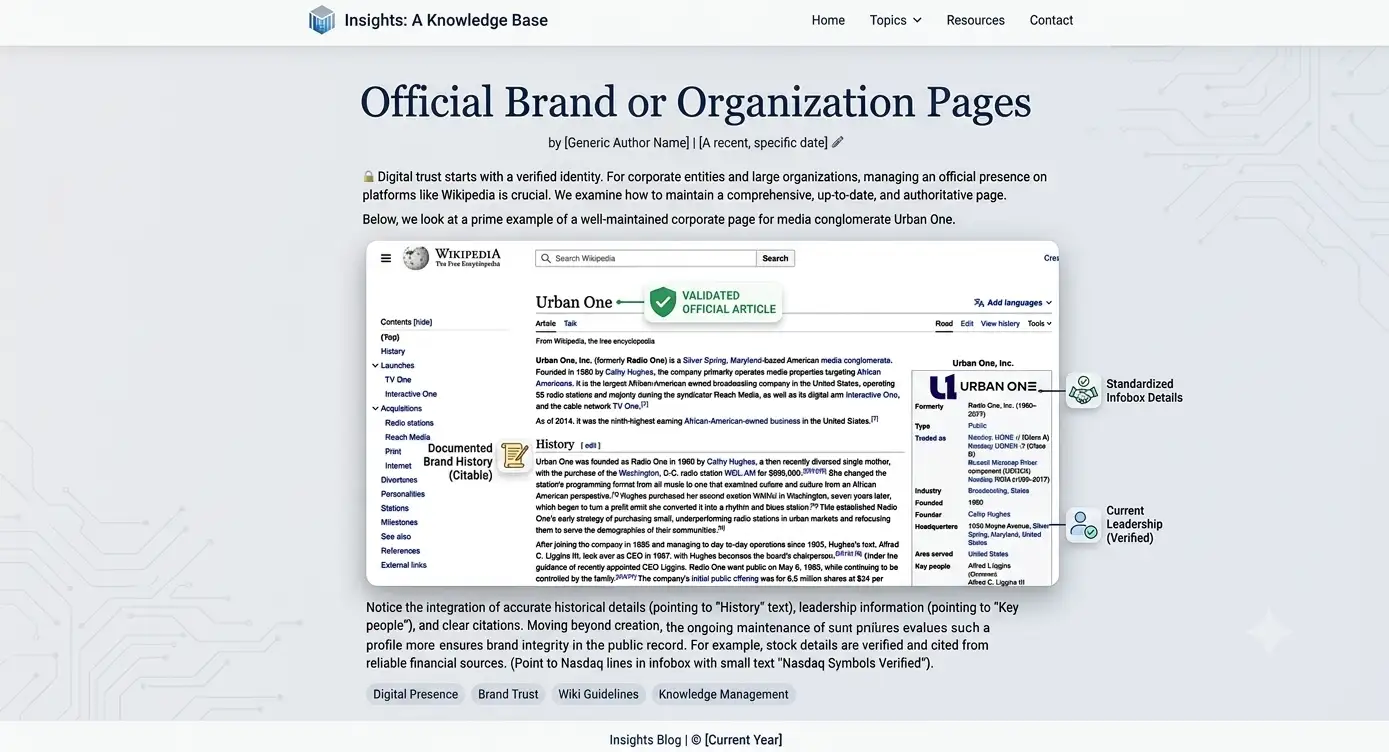
Official Brand or Organization Pages
If your company, organization, app, or platform has a Wikipedia article, an official website link may be suitable in the infobox or external links section. However, the page itself must usually be notable enough for Wikipedia first.
If you need help understanding whether your brand qualifies for a Wikipedia article, check our Wikipedia page creation service.
Step 2: Find Relevant Wikipedia Pages
After creating a strong source page, search for Wikipedia pages that are directly related to your topic.
Do not target random high-authority pages. Relevance matters more than authority.
Use Google search operators like:
site:wikipedia.org "your topic"site:wikipedia.org "your keyword" "citation needed"site:wikipedia.org "your industry" "external links"site:wikipedia.org "your topic" "dead link"site:wikipedia.org "your topic" "failed verification"
For example, if your website has a strong report about remote work statistics, you could search:
site:wikipedia.org "remote work" "citation needed"
Then review the article carefully. Look for places where your content genuinely supports an unsourced claim or improves an existing weak citation.
Step 3: Look for “Citation Needed” Opportunities
One of the most popular ways to get backlinks from Wikipedia is by finding “citation needed” tags. These tags mean that a statement needs a reliable source.
However, you should not add your link just because there is a citation-needed tag. Your content must directly support the exact statement.
Before adding a citation, check:
- Does your page prove the claim?
- Is your page neutral and factual?
- Is your website trustworthy?
- Is the information current?
- Is your content better than other available sources?
- Is the claim important enough to stay in the article?
If your content only partly supports the claim, do not force the link. It is better to find a better match than to risk removal.
Step 4: Use Dead Link Building on Wikipedia
Dead link building is another ethical way to earn Wikipedia backlinks. Many Wikipedia articles contain old links that no longer work. These are often marked as dead links.
The process is simple:
- Find a dead link on a relevant Wikipedia page.
- Check what the old source used to contain.
- Create or identify a better replacement resource on your website.
- Suggest or add the replacement citation if it genuinely supports the same information.
This method works best when your replacement content is close to the original source. If the old link was a statistics report, your replacement should also provide statistics. If the old link was a historical source, your replacement should cover the same history.
Do not replace a dead educational source with a sales page. That will look promotional and will likely be removed.
Step 5: Check Existing References
Sometimes a Wikipedia article already has references, but some of them may be weak, outdated, or less useful. Your website may be a better source if it provides newer information, clearer data, or a more complete explanation.
Look for references that are:
- Outdated
- Broken
- Too general
- Poorly formatted
- Not directly supporting the claim
- From low-quality pages
- Missing important context
If your content is clearly better, you may be able to suggest it as a replacement or additional citation.
Be careful: do not remove good sources just to add your own. Wikipedia editors dislike link replacement that appears self-serving.
Step 6: Understand External Links vs. References
Many beginners confuse external links with references to get backlinks from Wikipedia.
A reference supports a specific fact inside the article. A reference is usually placed after a sentence or paragraph.
An external link is usually placed at the bottom of the article and gives readers a useful additional resource.
In most cases, citation links are more natural than general external links. Wikipedia does not want the external links section to become a list of promotional websites. A link in that section should be highly relevant, useful, and limited.
If your page supports a fact, use it as a reference. If your page is an official website or a uniquely valuable resource, it may belong in the external links section.
Step 7: Avoid Promotional Editing
Wikipedia is strict about promotional editing. If you own the website, work for the brand, or are being paid to add a link, you have a conflict of interest.
That does not always mean you can never suggest an edit. But you should be transparent and careful. In many cases, the safest method is to use the article’s Talk page and suggest the source instead of directly adding it yourself.
A good Talk page suggestion might look like this:
Hello, I noticed that this section needs a source for the statement about [specific claim]. This page provides relevant data and may be useful as a citation: [your page]. I have a connection to the website, so I am suggesting it here for independent editors to review.
This approach is more transparent and less risky than secretly adding your own link.
Step 8: Build Trust Before Adding Links
If your Wikipedia account has no editing history and your first edit is adding your own website link, it may look suspicious.
A better approach is to contribute value first:
- Fix grammar
- Improve formatting
- Add neutral information
- Update outdated facts
- Remove spam
- Add reliable third-party sources
- Help improve article structure
This helps show that you are not only there to promote your website.
Still, trust does not guarantee link approval. Wikipedia links are controlled by editorial judgment, and any editor can review, change, or remove your contribution.
Step 9: Make Your Source Page Stronger
If your source page is weak, even a relevant link may not stay. Before using a page for Wikipedia link building, improve its quality.
Your page should have:
- A clear title
- Updated information
- Author or organization details
- Sources for claims
- Clean formatting
- No misleading statements
- No excessive ads
- No aggressive popups
- No thin AI-generated content
- No copied content
- No fake expert claims
- A useful purpose beyond selling something
For example, if you want a Wikipedia backlink to a page about “online micro jobs,” your page should explain the topic deeply, include examples, provide accurate definitions, and cite trustworthy information. A short page that only says “buy our service” will not work.
Step 10: Monitor the Link After Placement
Getting the link is not the final step. Wikipedia pages are edited constantly. A link can be removed, changed, replaced, or challenged at any time.
After placement, monitor:
- Whether the link remains live
- Whether another editor questions it
- Whether the article changes
- Whether the source still supports the claim
- Whether the page receives referral traffic
- Whether the link is archived properly
If the link is removed, do not immediately add it again. First, check the edit summary and understand why it was removed. Re-adding the same link repeatedly can be viewed as spam.
Common Mistakes to Avoid
Many people fail at Wikipedia backlink building because they treat it like normal SEO link insertion. Avoid these mistakes:
Adding Links to Unrelated Pages
To get backlinks from Wikipedia from a random page is not useful if the topic is unrelated. Relevance is the first requirement.
Linking to Sales Pages
Direct product, service, checkout, affiliate, or lead-generation pages are rarely good Wikipedia citations. Educational and factual pages are much better.
Overusing Exact-Match Anchor Text
Wikipedia does not work like guest posting. You usually cannot control anchor text for SEO. The link must fit the citation format.
Adding the Same Website Everywhere
If you add the same domain to many pages, it may look like spam. Wikipedia editors can detect patterns quickly.
Ignoring Conflict of Interest
If you are connected to the website, be honest. Secret promotional editing can damage trust and lead to link removal.
Expecting Permanent Results
No Wikipedia backlink is truly permanent. Wikipedia is open to editing, and links can be removed if editors believe they are not useful.
What Type of Website Can Get Wikipedia Backlinks?
Not every website is a good fit. Wikipedia editors prefer sources that provide reliable, useful, and verifiable information.
Websites with better chances include:
- Research websites
- News publications
- Educational websites
- Government or institutional websites
- Nonprofit organizations
- Industry data platforms
- Official company websites for their own article
- Websites with original reports or studies
- Well-written informational blogs with strong sourcing
Websites with lower chances include:
- Thin affiliate sites
- Low-quality blogs
- AI-spun content sites
- Pure sales pages
- Private blog networks
- Spammy SEO pages
- Websites with fake claims
- Pages full of popups and ads
If you want your website to be cited, make it worthy of citation first.
Is It Safe to Buy Wikipedia Backlinks?
This is a common question: Is it safe to get backlinks from Wikipedia? The safer answer is: you should not think of Wikipedia backlinks as a simple paid SEO shortcut. Buying links only to manipulate rankings can create risks with both search engines and Wikipedia.
A safer service should focus on:
- Researching relevant pages
- Checking link suitability
- Finding dead-link opportunities
- Creating better citation resources
- Suggesting edits transparently
- Improving source quality
- Following Wikipedia-style formatting
- Avoiding spam and over-promotion
If you use a service, choose one that understands Wikipedia guidelines and does not promise impossible outcomes like “guaranteed permanent links.” Wikipedia editors can remove any link if they believe it does not belong.
At BuyWikiLinks, we focus on relevance, manual review, and careful placement planning. You can explore our Wikipedia backlinks service to understand available options.
How Long Does It Take to Get a Wikipedia Backlink?
The timeline depends on the method.
A simple citation update may take a short time if the page is clearly relevant and the source is strong. Dead link replacement may take longer because you need to review the original source and create a suitable replacement. Talk page suggestions may take more time because another editor needs to review them to get backlinks from Wikipedia.
In general, the process can take a few days to several weeks depending on:
- Article activity
- Editor review
- Source quality
- Topic sensitivity
- Link relevance
- Your editing history
- Whether the page is protected
- Whether the article has strict editorial attention
Quality matters more than speed. A fast link that gets removed is not useful.
How to Increase Your Chances of Success
To improve your chance of getting a Wikipedia backlink, follow these best practices:
- Choose a highly relevant Wikipedia article.
- Use a page that supports a specific fact.
- Make sure your content is factual and neutral.
- Avoid linking to commercial landing pages.
- Add value to the article, not just your website.
- Use proper citation formatting.
- Be transparent about conflicts of interest.
- Avoid repeated link insertion.
- Monitor edits after placement.
- Improve your website’s trust signals.
The more your link helps readers, the more likely it is to survive.
Should You Create a Wikipedia Page for Your Brand?
Sometimes people want a Wikipedia backlink when what they really need is a complete Wikipedia presence. If your business, personal brand, company, or organization is notable enough, a Wikipedia page may provide stronger long-term visibility than a single backlink.
However, Wikipedia pages are not available for every brand. You usually need significant coverage from independent, reliable sources. Press releases, social media profiles, directory listings, and your own website are usually not enough.
If you are unsure whether you qualify, review our Wikipedia page creation service for brand, company, and personal page support.
Final Thoughts: Get Wikipedia Backlinks the Right Way
So, how do you get backlinks from Wikipedia?
You earn them by creating useful content, finding relevant article opportunities, supporting real claims, respecting Wikipedia’s rules, and avoiding spammy link-building shortcuts.
A Wikipedia backlink can be valuable, but only when it makes sense for the reader. The goal is not just to place a link. The goal is to become a source worth citing.
If your website has high-quality information, original data, or a useful resource that fits a Wikipedia article, you may have a real opportunity. Start with relevance, improve your content, check the article carefully, and use a transparent process.
Need help finding safe Wikipedia backlink opportunities? Visit our Wikipedia backlink service or contact BuyWikiLinks for manual research and guidance.
Frequently Asked Questions
Are Wikipedia backlinks dofollow or nofollow?
Most Wikipedia external links are nofollow or use similar attributes. They may not pass traditional PageRank like dofollow backlinks, but they can still provide referral traffic, trust, visibility, and get backlinks from Wikipedia opportunities.
Can I add my own website link to Wikipedia?
You can suggest or add a link only if it genuinely improves the article and follows Wikipedia guidelines. If you have a conflict of interest, it is safer to suggest the link on the Talk page and let independent editors review it.
Why was my Wikipedia backlink removed?
Your link may have been removed because it looked promotional, did not support the claim, was not reliable enough, duplicated existing sources, or was added to an unrelated article.
What is the best way to get a Wikipedia backlink?
The best way is to create a reliable page and get backlinks from Wikipedia, and find a relevant Wikipedia article where your page supports a specific fact, replaces a dead citation, or improves an existing weak reference.
Can Wikipedia backlinks improve traffic?
Yes, a relevant Wikipedia backlink can send targeted referral traffic. People use Wikipedia for research, so a useful citation can attract visitors who are already interested in the topic.
Are paid Wikipedia backlinks safe?
Paid backlink placement can be risky if it is done only for SEO manipulation or without transparency. A safer approach focuses on citation research, content quality, relevance, and compliance with Wikipedia’s editing standards.
What pages should I use for Wikipedia backlinks?
Use informational pages, data reports, research studies, guides, official resources, or strong educational content. Avoid linking directly to sales pages, checkout pages, affiliate pages, or thin promotional content. In this case, get backlinks from Wikipedia pages.
