
Wikipedia Account
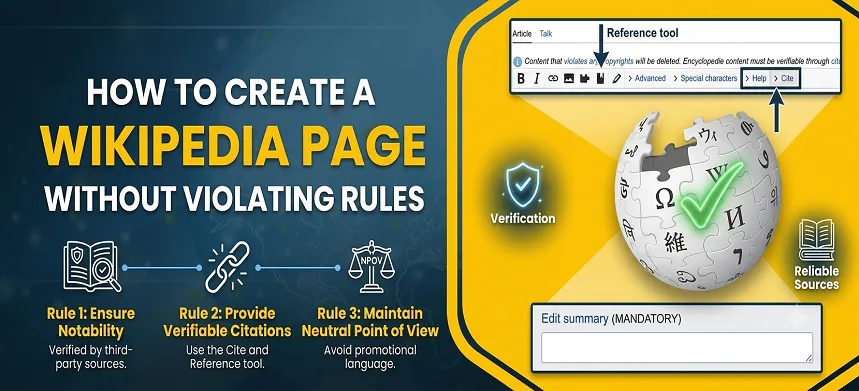
How to Create a Wikipedia Page Without Violating Wikipedia Rules
Jul
How to Create a Wikipedia Page Without Violating Wikipedia Rules
Creating a Wikipedia page can be valuable for a company, public figure, author, startup, artist, organization, or brand. A well-written Wikipedia article can support credibility, improve online visibility, and help people understand who you are through independent information.
But creating a Wikipedia page is not the same as publishing a blog post, business profile, or press release. Wikipedia has strict rules. If the page sounds promotional, lacks reliable sources, or does not meet notability standards, it may be rejected, deleted, or heavily edited by other users.
That is why the safest way to create a Wikipedia page is to understand the process before you start. This guide explains how Wikipedia page creation works, what mistakes to avoid, and when professional Wikipedia support can help.
If you need expert guidance before creating a page, you can start with our Wikipedia account consultation service. Let’s be details of create a Wikipedia page.
What Makes Wikipedia Different From Other Websites?
Wikipedia is an encyclopedia, not a marketing platform. Its goal is to provide neutral, verifiable information based on reliable sources. This means a Wikipedia article should not read like advertising or brand promotion.
A company website can say, “We are the leading agency in our industry.” A Wikipedia article should not say that unless independent reliable sources clearly support the claim.
A press release can highlight achievements in a positive tone. A Wikipedia article should present facts in a balanced, neutral way.
This difference is one of the main reasons many new Wikipedia pages get rejected. People often write the article like a business profile instead of an encyclopedia entry.
Can Anyone Create a Wikipedia Page?
Technically, many users can create or draft Wikipedia pages. However, not every topic qualifies for a Wikipedia article.
Before you create a Wikipedia page, you need to ask one important question:
Is the subject notable enough for Wikipedia?
Wikipedia notability usually depends on significant coverage from independent and reliable sources. The subject should be covered in trusted publications that are not controlled by the person, company, or organization being written about.
You can read more about Wikipedia’s general notability expectations here: Wikipedia notability guideline.
If your company or personal brand does not have enough independent coverage, creating a Wikipedia page too early may lead to rejection.
Step 1: Check Wikipedia Notability First
The first step in create a Wikipedia page is not writing. It is research.
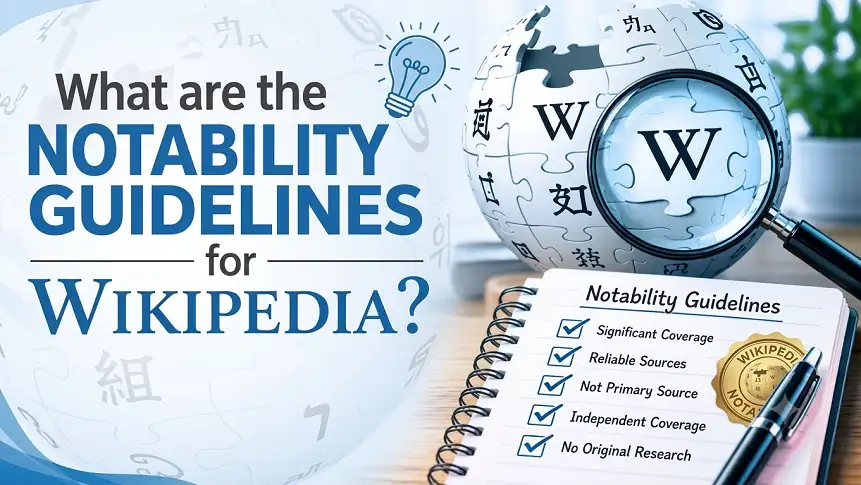
You need to collect sources and check whether they are strong enough. A topic is more likely to qualify if it has been covered by independent newspapers, magazines, books, academic sources, respected industry publications, or major media outlets.
Good sources usually include:
- Independent news articles
- Magazine features
- Book mentions
- Academic publications
- Major interviews
- Trusted industry coverage
- Third-party profiles from reputable media
Weak sources usually include:
- Your own website
- Press releases
- Social media pages
- Paid directory listings
- Sponsored posts
- Company profile pages
- Self-published blogs
- Basic database entries
Many rejected Wikipedia drafts fail because the sources are not strong enough. If the sources are weak, even a well-written article may not survive.
Step 2: Understand Conflict of Interest
If you are creating a Wikipedia page about yourself, your company, your client, your employer, or someone who pays you, there may be a conflict of interest.
Conflict of interest does not always mean the topic can never be covered. But it does mean you should be careful. Wikipedia expects transparency, especially when paid editing is involved.
Wikipedia has a paid-contribution disclosure policy that explains when contributors should disclose their relationship to the subject. You can review it here: Wikipedia paid-contribution disclosure.
For businesses, agencies, founders, and public figures, this is very important. To create a Wikipedia page in a promotional or hidden paid-editing style can create long-term problems.
Step 3: Avoid Promotional Language
Promotional writing is one of the fastest ways to get a Wikipedia page rejected.
Avoid words and phrases such as:
- Best
- Leading
- Top-rated
- Trusted by thousands
- World-class
- Revolutionary
- Most reliable
- Number one
- Award-winning, unless clearly supported by strong sources
Instead, write in a factual tone.
For example, instead of writing:
“ABC Company is a leading global software company providing world-class solutions.”
A more neutral version would be:
“ABC Company is a software company founded in 2018. It develops project management tools for small and medium-sized businesses.”
The second version is more suitable for Wikipedia because it is simple, factual, and less promotional.
Step 4: Build the Article Around Reliable Sources
A strong Wikipedia article should be built from sources, not from marketing claims.
Before writing each section, ask:
- Which reliable source supports this information?
- Is the source independent?
- Is the statement neutral?
- Is the information important enough for an encyclopedia?
- Would a third-party editor consider this useful?
Good Wikipedia writing is not about saying everything positive about a subject. It is about summarizing what reliable sources have already published.
For example, a company article may include:
- Founding history
- Key products or services
- Major milestones
- Funding or acquisitions
- Public recognition
- Legal or public controversies, if covered by reliable sources
- Notable partnerships
- Independent media coverage
It should not include:
- Sales copy
- Service guarantees
- Pricing tables
- Customer testimonials
- Promotional slogans
- Keyword-stuffed descriptions
- Unverified achievements
Step 5: Use a Proper Wikipedia Article Structure
Create a Wikipedia page that needs a clear and simple structure. For most company, person, or brand pages, the structure should be easy to follow.
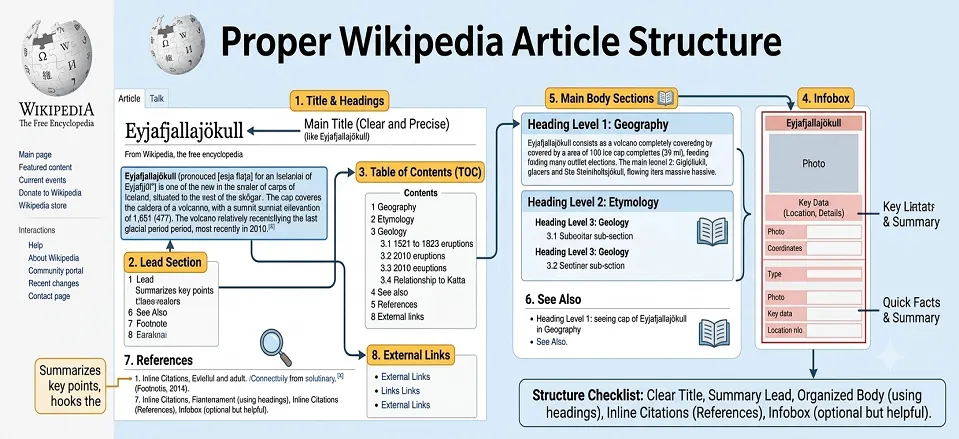
A basic structure may include:
Introduction
The introduction should briefly explain who or what the subject is. It should summarize the most important facts without sounding promotional.
History or Background
This section can explain when the company, person, or organization started and how it developed over time.
Career, Products, or Services
For individuals, this may cover career highlights. For companies, this may cover major products, services, or business activities.
Recognition or Media Coverage
This section can include awards, rankings, interviews, or notable coverage, but only when supported by reliable independent sources.
References
Every important claim should be supported by a proper citation.
The goal is to create a clean, balanced article that looks like an encyclopedia entry, not a landing page.
Step 6: Be Careful With Backlinks
Many people create a Wikipedia page because they want backlinks. However, Wikipedia is not a normal link-building platform.
Adding links only for SEO can be risky. Wikipedia editors may remove links that look promotional, unnecessary, or unrelated to the article. A link should only be added when it genuinely supports the information in the article.
If your main goal is link-building, you should first understand what types of Wikipedia links are acceptable. You can read our guide on how to get backlinks from Wikipedia for a safer explanation.
The best approach is to focus on citations and useful references, not spammy link placement.
Step 7: Do Not Rush the Submission
Many people make the mistake of submitting a weak draft too early. Once a page is rejected, it may become harder to fix because reviewers can see the page history and previous issues.
Before submitting, review the article carefully:
- Does the topic clearly meet notability standards?
- Are the sources independent and reliable?
- Is the tone neutral?
- Are promotional claims removed?
- Are citations properly placed?
- Is the article written like an encyclopedia?
- Is there any conflict of interest that should be disclosed?
If you are unsure, it is better to request a professional review before submission.
You can explore our Wikipedia page creation and editing support if you need help reviewing a draft or planning the right strategy.
Common Mistakes That Get Wikipedia Pages Rejected
Many Wikipedia pages are rejected for simple but serious reasons. Avoiding these mistakes can improve your chances of success.
Using Weak Sources
Sources from your own website, LinkedIn profile, Crunchbase page, press release, or social media account are usually not enough. Wikipedia needs independent coverage.
Writing Like a Sales Page
If the article sounds like a company brochure, it may be rejected. Wikipedia content should be neutral and factual.
Creating a Page Too Early
Some companies and personal brands are not yet notable enough. In that case, it may be better to build more media coverage first.
Overusing Keywords
Keyword stuffing can make the article look unnatural and promotional. Wikipedia articles are not written for SEO in the same way as blog posts.
Ignoring Conflict of Interest
If you are connected to the subject, you need to be careful about how edits are made and disclosed.
Adding Too Many External Links
Wikipedia is not a place to place promotional links. Only use links that support the article and meet reference standards.
What If Your Wikipedia Page Was Rejected?
If your Wikipedia page was rejected, do not simply resubmit the same draft. First, identify the reason.
Common rejection reasons include:
- Not enough reliable sources
- Topic not notable enough
- Promotional writing
- Poor formatting
- Conflict-of-interest concerns
- Unsupported claims
- Article reads like advertising
A rejected draft can sometimes be improved. But if the subject is not notable yet, the better strategy may be to build stronger independent coverage before trying again.
Professional review can help identify whether the draft should be improved, rewritten, or paused until better sources are available.
When Should You Get Professional Wikipedia Help?
Professional Wikipedia help can be useful when the situation is sensitive, confusing, or important for your brand.
You may need support if:
- You want to create a company Wikipedia page
- You are a public figure or founder
- Your draft was rejected
- Your page was deleted
- You are unsure about notability
- You need a source audit
- You have conflict-of-interest concerns
- You want to avoid risky account activity
- You need help understanding Wikipedia rules
A proper consultation should not promise guaranteed approval. Instead, it should explain the risks, review your sources, and recommend the safest path.
For account-related questions or safe editing guidance, visit our Wikipedia account consultation service.
Final Thoughts
Creating a Wikipedia page can be powerful, but only when done correctly. A successful Wikipedia article depends on notability, reliable sources, neutral writing, transparency, and patience.
Trying to force a page without meeting Wikipedia standards can lead to rejection, deletion, or public editing problems. The better approach is to check your eligibility, prepare strong sources, write in a neutral tone, and follow Wikipedia’s rules carefully.
If you are serious about building a Wikipedia presence or want to create a Wikipedia page for your business, personal brand, or organization, start with a proper review. A safe strategy can save time, reduce risk, and help you avoid mistakes that damage your long-term credibility.
